London's Minister of Happiness: Redefining Civic Leadership for Wellbeing
By Dr. Ahmed Haq
Published on 18 September 2026
What if London had a Minister of Happiness? Not as a feel-good gimmick or political slogan, but as a serious, data-driven approach to governance that prioritizes the wellbeing and life satisfaction of eight million Londoners. While other cities and nations—from Dubai to New Zealand—have pioneered happiness governance, London has the opportunity to become the world's first major metropolitan area to fully integrate wellbeing into every policy decision.
This isn't about creating new bureaucracy or wishful thinking. It's about recognizing that a city's success should be measured not just by GDP growth or housing starts, but by whether its residents can genuinely say they're living fulfilling, happy lives. In a time when mental health challenges are rising, housing stress is endemic, and urban anxiety has become normalized, London needs leadership that explicitly prioritizes human flourishing.
The concept is both radical and practical: integrate happiness metrics into existing mayoral responsibilities, create accountability for wellbeing outcomes, and transform London from a city that merely functions into one that actively cultivates joy, connection, and life satisfaction for all its residents.
Why London Needs Happiness Governance Now
The Wellbeing Crisis
London faces a paradox: it's one of the world's most successful cities economically, yet many Londoners report high levels of stress, loneliness, and life dissatisfaction. Housing costs consume disproportionate income, commutes are long and expensive, green space is limited, and social connection is increasingly difficult to maintain. Traditional governance metrics miss these quality-of-life challenges entirely.
Global Leadership Opportunity
Scotland has a Wellbeing Economy Secretary. New Zealand pioneered the Wellbeing Budget. Finland uses happiness ambassadors. Dubai has embedded happiness into government service delivery. London, as a global city, has the opportunity to lead by demonstrating that happiness governance isn't just for small nations—it can work at metropolitan scale.
Measurable Impact
Happiness isn't subjective wishful thinking. The ONS Wellbeing measures, NHS mental health data, TfL satisfaction surveys, air quality indices, and crime perception studies already provide robust happiness indicators. We have the data—we just need the political will to prioritize it.
Integrating Happiness into the Mayor's Role
The Mayor of London doesn't need a new ministry—instead, happiness should become a cross-cutting governance pillar that influences every policy decision. This means transforming how we think about mayoral responsibilities, from reactive problem-solving to proactive wellbeing creation.
Current Mayoral Focus
- • Housing delivery numbers
- • Transport efficiency metrics
- • Crime reduction statistics
- • Economic growth indicators
- • Environmental targets
Important but incomplete picture of city success
Happiness-Integrated Approach
- • Housing + community wellbeing
- • Transport + stress reduction
- • Safety + peace of mind
- • Economy + life satisfaction
- • Environment + mental health
Every policy evaluated for wellbeing impact
The Deputy Mayor for Wellbeing
Rather than creating an entirely new role, London could appoint a Deputy Mayor for Wellbeing & Happiness, positioned alongside the existing Deputy Mayors for Policing, Environment, and Housing. This person would coordinate across all mayoral responsibilities to ensure happiness impact is considered in every major decision.
The London Happiness Index
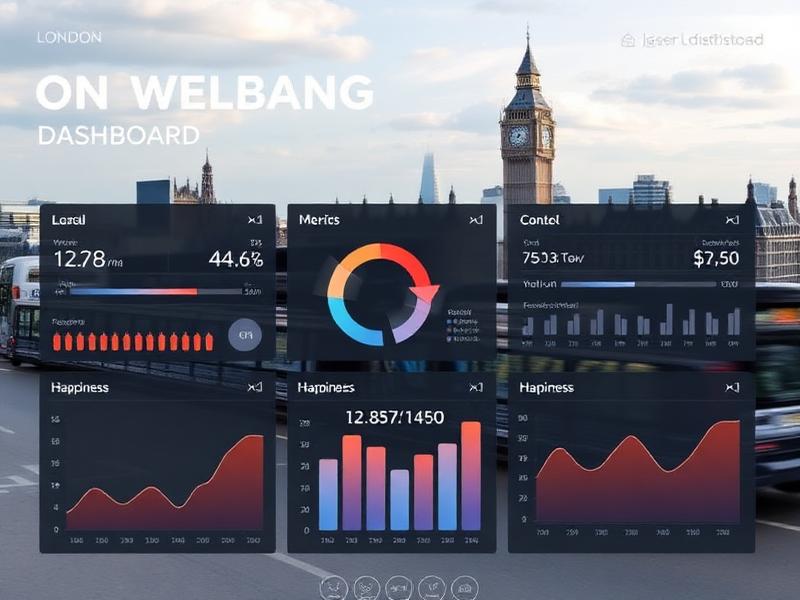
London needs a comprehensive Happiness Index that tracks and publicly reports on the factors that most influence residents' wellbeing. This wouldn't replace existing metrics but would provide a more complete picture of how policy decisions affect real lives.
Core Happiness Metrics
- Housing affordability stress (percentage of income spent on housing)
- Commute satisfaction and stress levels (TfL data plus wellbeing surveys)
- Green space access and usage (distance to parks, frequency of use)
- Social connection indicators (loneliness rates, community engagement)
- Safety perception (feeling safe walking at night, trust in community)
- Cultural participation (access to arts, sports, entertainment)
- Work-life balance (commute times, flexible working availability)
- Air quality and environmental satisfaction
Public Dashboard
Create a publicly accessible London Happiness Dashboard, updated quarterly, where residents can:
- View borough-by-borough happiness metrics
- Submit feedback on factors affecting their wellbeing
- Track progress on happiness-focused initiatives
- Compare London's performance to other global cities
- Suggest new policies or improvements
Learning from Global Pioneers
London can learn from cities and nations that have successfully integrated happiness into governance, adapting their approaches to our unique metropolitan context.
New Zealand's Wellbeing Budget
New Zealand pioneered the concept of budgeting for wellbeing, explicitly funding mental health services, child welfare programs, and indigenous community support. London could adopt a similar approach, ensuring that budget allocations are evaluated for their happiness impact, not just economic efficiency.
Scotland's Wellbeing Economy
Scotland has a dedicated Wellbeing Economy Secretary who ensures that economic policies are judged by their impact on citizen wellbeing, not just GDP growth. This provides a model for how London could integrate happiness considerations into economic development decisions.
Dubai's Happiness Integration
Dubai embedded happiness metrics into government service delivery, training public sector workers to prioritize citizen satisfaction and wellbeing in every interaction. London's councils and TfL could adopt similar approaches to public service delivery.
Finland's Happiness Ambassadors
Finland uses happiness ambassadors to promote wellbeing in tourism and civic engagement. London could create similar roles focused on community wellbeing, working at the borough level to identify and address local happiness challenges.
Practical Implementation Steps
Year One: Foundation Building
- Appoint a Deputy Mayor for Wellbeing & Happiness
- Establish the London Happiness Index baseline using existing data
- Launch public consultation on happiness priorities
- Begin happiness impact assessments for major policy decisions
- Create partnerships with academic institutions for wellbeing research
Year Two: Policy Integration
- Launch the public London Happiness Dashboard
- Integrate wellbeing considerations into housing, transport, and environmental strategies
- Begin happiness-focused budget allocations
- Train public sector staff in wellbeing-centered service delivery
- Establish borough-level happiness coordinators
Year Three: Global Leadership
- Publish London's first annual Happiness Report
- Launch international happiness governance network
- Demonstrate measurable improvements in wellbeing outcomes
- Share London's happiness governance model with other global cities
- Set ambitious targets for London as the "World's Happiest City" by 2030
Beyond the Symbolic: Real Policy Impact
A Minister of Happiness approach isn't about feel-good symbolism—it's about fundamental changes to how London makes policy decisions. Every major initiative would be evaluated through a happiness lens, asking not just "Does this work?" but "Does this make Londoners' lives better?"
Transport Example
Instead of only measuring journey times and cost efficiency, TfL would also track commute stress levels, social connection opportunities on public transport, and the impact of transport improvements on mental health and life satisfaction.
Housing Example
Housing policy would consider not just delivery numbers and affordability ratios, but also community cohesion, access to green space, and the psychological impact of housing security on wellbeing.
Economic Development Example
Business and economic policies would be evaluated for their impact on work-life balance, job satisfaction, and community wellbeing, not just employment numbers and GDP contribution.
The Philosophical Case for Happiness Governance
This isn't just about policy mechanics—it's about what we believe government is for. If the purpose of civic leadership is to improve people's lives, then measuring and prioritizing happiness isn't idealistic—it's essential. Cities exist to enable human flourishing, not just economic efficiency.
London has always been a city of possibility, innovation, and human creativity. A Minister of Happiness approach would honor that tradition by explicitly prioritizing the conditions that allow people to thrive: safe communities, affordable housing, meaningful connections, beautiful spaces, and the sense that their city cares about their wellbeing.
The question isn't whether London can afford to prioritize happiness—it's whether we can afford not to.
A Challenge to London's Leaders
This proposal is a direct challenge to London's political leaders: are you willing to be held accountable not just for housing numbers and crime statistics, but for whether Londoners are actually happy? Are you prepared to measure success by life satisfaction as well as economic growth?
The infrastructure for happiness governance already exists—we have the data, the technology, and the academic research. What we need is leadership brave enough to prioritize wellbeing over traditional political metrics, and vision ambitious enough to imagine London as the world's first truly happy megacity.
This isn't utopian thinking—it's practical governance that recognizes that a city's ultimate purpose is enabling its residents to live fulfilling, connected, joyful lives. London has the opportunity to lead the world in demonstrating that happiness governance isn't just possible at metropolitan scale—it's necessary.
Conclusion: London's Happiness Legacy
London stands at a crossroads. We can continue with governance that treats happiness as a nice-to-have side effect of good policy, or we can pioneer an approach that makes wellbeing the central organizing principle of civic leadership.
The choice is clear: London can be remembered as the city that showed the world how to govern for human flourishing, or as the place that had all the tools for happiness governance but lacked the courage to use them.
A Minister of Happiness isn't about creating new bureaucracy—it's about transforming existing leadership to prioritize what actually matters: whether the people who call London home can honestly say they're living good, happy, fulfilling lives.
The time for happiness governance is now. The question is whether London will lead or follow.