Field Dispatch · The London Model
The Death of Soho
A love letter to a corpse. A whisky-soaked post-mortem on the neighbourhood that taught me how to smoke, how to lie, and how to fall in love with a stranger between last orders and the first night bus. Written in the only voice I have left.
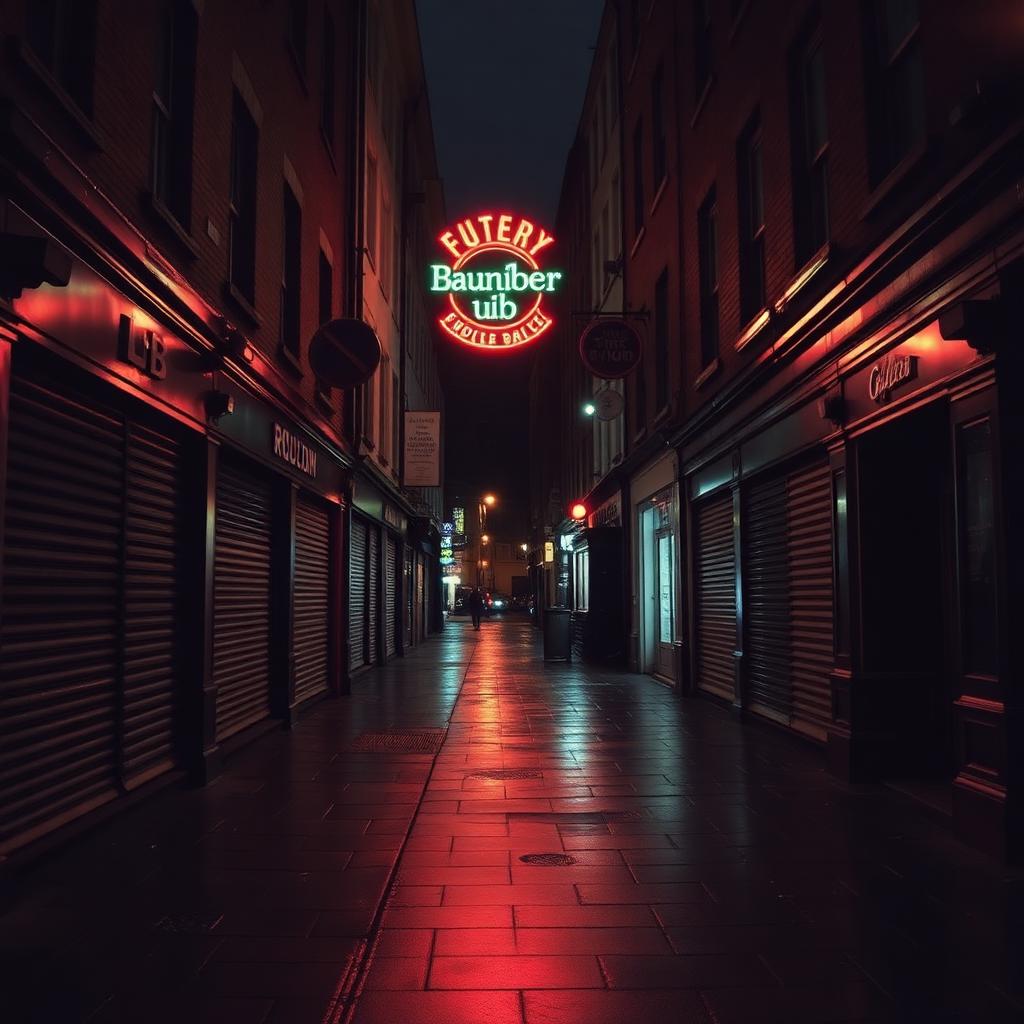
So I'm standing on Old Compton Street at half past eleven on a Friday night, and I can hear my own footsteps. Let me say that again, because it didn't sound stupid enough the first time. I can hear my own footsteps. In Soho. On a Friday. I light a cigarette out of muscle memory and a man in a hi-vis vest materialises from a doorway like a Dickensian ghost to inform me that this particular three feet of pavement is, technically, a smoke-free zone. I tell him I'm mourning. He tells me I can mourn over there, by the bins.
That, dear reader, is the whole essay. You can stop here. But you won't, because neither will I.
1. A confession, before we begin
I loved this neighbourhood the way you love a woman who is bad for you and knows it. Soho was the first place in London that didn't ask me what I did for a living before deciding whether I was worth a drink. It had jazz in basements and Italians who shouted at you about coffee and a patisserie that sold cigarettes at three in the morning to people who had clearly lost an argument with themselves. It was filthy, beautiful, expensive, generous, and slightly criminal, which is precisely the correct ratio for a great city block.
Now it's a Pret. Several Prets. A Pret next to a Pret, with a vape shop in between in case you forget you're in Britain.
2. The murder weapon was a clipboard
People want the death of Soho to be a thriller. A property developer in a dark suit, a briefcase full of cash, a councillor with a guilty conscience. I'm afraid it's much worse than that. Soho wasn't murdered. Soho was committeed to death. A thousand small, polite, terminally British acts of cowardice, each one signed off by someone with a lanyard, a pension, and the haunted look of a person who has never in their life done anything spontaneous.
The first wave was the residents. Lovely, lovely residents. The kind who pay one-point-four million pounds for a one-bed flat above a jazz club that has been operating continuously since 1959, and then experience the dawning, life-altering revelation that jazz clubs make jazz noises. So they complain. The council, which exists primarily to be complained at, complains back at the jazz club. The jazz club, operating on margins thinner than a Pret napkin and considerably less profitable, closes. The residents sleep beautifully. The city dies a little. Everybody wins, by which I mean nobody does.
3. Agent of Change, or: the law nobody read
Other cities figured this out while we were still licking the envelopes. Berlin, Melbourne, Sydney, even — God help us all — Manchester. The principle is called Agent of Change, and it is so blindingly obvious that I get a small migraine every time I have to explain it: whoever shows up second pays for the soundproofing. Build flats next to a forty-year-old club,you bring the double glazing. Not the club. Not the saxophonist. You. The fully-grown adult who, with the full use of your senses, chose to buy a flat next to a club.
England eventually scribbled a version of this into the National Planning Policy Framework in 2018. Lovely. Westminster Council then enforced it with the urgency of a tortoise on tramadol, while Madame Jojo's, the Astoria, the 12 Bar, the Coach & Horses regulars, half of Denmark Street and most of the basement scene quietly disappeared into the long, beige night. Ronnie Scott's survives by being a fortress with a brand. Bar Italia survives because some saints still walk among us. Everything else got noise-abated into a Tesco Metro.
4. The smoking ban: a translation error that ate an industry
Now. The smoking ban. Pour yourself something brown and stay with me.
In 2004 Ireland banned smoking indoors. In 2007 England followed. So far, so European, so reasonable, so I-suppose-we-had-it-coming. Except — and this is the punchline nobody in this country has the stomach to deliver — walk into a bar in Madrid, Rome, Lisbon, Berlin, Paris, Brussels, Athens, or any provincial Spanish town whose name you can't pronounce. There is a terrace. With heaters. With ashtrays. With a roof. With three walls. With a curtain. With a ventilated, regulated, perfectly legal little enclave where consenting adults do a legal thing without being made to feel like they've molested a swan.
Somewhere between the directive landing in Brussels and the statutory instrument landing in Whitehall, a man in a beige office — and it was a man, and the office was definitely beige — translated "ban indoor smoking" as "ban anything with more than two walls, a roof, or a hint of joy." The Irish did the same trick. The continentals shrugged, built terraces, kept their bars, and now sell us postcards of them.
The British Beer & Pub Association says we've lost roughly 13,000 pubs since 2000. Spain, similar population, has actually added bars. Germany is broadly flat. The variable isn't the directive. The variable is us. The variable is always us. We are a country that, given a perfectly good European rule, will gold-plate it until it sets like concrete and then issue a fine to anyone caught trying to chip it off.
5. The body count, in actual money
Let me do the maths, because the bureaucrats won't and the politicians can't. The Night Time Industries Association reckons UK nightlife was worth around £66 billion a yearat its peak, employing about 1.3 million people. Since 2020 we've lost more than a third of our nightclubs — from roughly 1,700 to under 1,100. London alone shed more than half its nightclubs between 2005 and 2024, per the NTIA and the GLA's own figures.
Now zoom in on Soho. Westminster's own night-time economy data puts Soho and the West End at something like £3-4 billion a year in gross value added. A napkin calculation, which is the only kind of calculation Soho deserves: if the neighbourhood is running at 60% of its pre-2010 capacity because half the venues are gone and the survivors are shut by midnight, you're looking at an annual opportunity cost of around £1.5-2 billion. Per year. Compounded across fifteen years. A £20-30 billion hole, conservatively, in the side of the London economy. From one neighbourhood. About the size of three new hospitals, give or take a knighthood.
And that's just the money we can count. It doesn't count the bands that never formed, the chefs that never opened, the novels that never got drafted on the back of a beermat at 2am, the tourists who flew to Lisbon because London "closes early now, doesn't it?", the graduates who moved to Berlin because the rent is half and the city is awake. It doesn't count the divorces that didn't happen because two people stayed up too late dancing. It doesn't count the marriages that did. You can't put those on a spreadsheet. The bureaucrats know this. It is precisely why they hate them.
6. The cult of "No"
Here's a parlour game. Apply for a late licence in Soho. Then apply for the same licence in Friedrichshain, Berlin. In Berlin you get a stamp, a yes, and a polite note about where to leave the bins. In Soho you get a four-month consultation, three objections from people who moved in last Tuesday, a hearing in front of a sub-committee, a CCTV specification thick enough to stop a bullet, dispersal plans, noise consultants, an acoustic survey, a Challenge 25 policy, a drugs policy, a smoking policy, and — if the gods are feeling generous — a licence that ends at 1am with the strict instruction that customers must leave "quietly, without congregating."
Without congregating. In Soho. A neighbourhood whose entire reason for existing is people congregating. You may as well issue a fishing licence on the strict condition the holder does not get the line wet.
The licensing officer is not evil. The councillor is not evil. The planning committee is not evil. They are something quieter and more lethal: they are optimising for the wrong thing. They are optimising for the absence of complaint, rather than the presence of life. And so we get a neighbourhood that is quiet, expensive, well-lit, well-CCTVed, and completely, catastrophically pointless.
7. The Brussels alibi, and why it falls apart
The Brexiteers love to blame Brussels. The Remainers love to blame Westminster. The truth is more embarrassing than either: the directives were broadly the same across Europe. The translation was uniquely, exquisitely British. We took a reasonable continental rule and gold-plated it. Working Time Directive? Europe shrugged. We built a compliance industry. Noise at Work? Europe issued guidance. We hired consultants and gave them company cars. The smoking ban? Europe drew a sensible line. We drew it with a chainsaw, then sub-contracted the chainsaw to a man on a fixed-term contract who'd never been to a pub.
The problem was never Europe. The problem is a civil service culture that has confused caution with competence, and a political class that has confused caution with virtue. The two of them have been having a beige little affair for forty years, and Soho is the orphaned child.
8. What this city actually needs: a DOGE for the dumb
Here's where the Americans, for all their many and varied lunacies, accidentally stumbled across a good idea. You can argue about the execution of the Department of Government Efficiency until your face turns the colour of a Whitehall carpet — and plenty of serious people have, at great length, on television — but the concept is unimprovable: a small, fixed-term unit whose entire job is to identify the bits of the state that exist purely to justify their own existence, and switch them off.
London needs its own. Call it whatever you like on the letterhead — the London Office of Bureaucratic Reduction sounds suitably grown-up — but call it, between ourselves and after the third drink, the Department for Cutting the Dumb. Three house rules:
- Aim high, not low. The problem isn't the parking warden on £24k who'd rather be home. The problem is the £140k director of strategic policy whose strategy is to write more strategic policy. The bad rules come from a small number of senior posts. Remove the posts and the rules stop breeding.
- Sunset clause. Two years and out. No empire-building. No permanent staff. No satellite office in Croydon. You come in. You cut. You leave. Anyone who tries to extend it gets cut as their parting gift.
- Everything in public. Every rule removed, every post closed, every pound saved, on a dashboard a teenager can read on the tube. Sunlight is the only disinfectant this town has ever respected.
Mandate from the Mayor. Immunity from the usual judicial review pantomime. Starter shortlist: Westminster licensing, TfL signage approvals, every borough planning committee that's refused a late licence in the last five years, and the noise abatement unit that treats a saxophone like a chemical weapon.
9. The Musk-shaped hole in British politics
Before the comments section catches fire: nobody is suggesting we import Elon Musk. The man would last about eleven minutes in a British planning meeting before flipping the table and tweeting something regrettable about the chair's haircut. But the archetype — the outsider with a hammer, a deadline, and zero patience for "we've always done it this way" — is the precise personality type Whitehall has been engineered, with great care and many royal commissions, to exclude.
Our political class is selected for the opposite virtues: caution, consensus, committee-survival, and a paralysing horror of appearing on the front page of the Daily Mail for any reason whatsoever. Those are excellent personality traits if your job is to manage a gentle, dignified national decline. They are terrible ones for reversing it. Soho doesn't need a wrecking ball aimed at its buildings. It needs one aimed squarely at the org chart.
10. A short, practical resurrection
Right. Enough diagnosis. The patient is on the table, the surgeon has had three drinks, let's operate. Here is the first hundred days of a serious London administration, none of which requires new money:
- Agent of Change, with actual teeth. Any residential conversion within 100m of an existing licensed venue pays for soundproofing, in full, before anyone moves in. Refuse and you don't get a completion certificate. Sue if you like; we'll see you in 2031.
- Presumption in favour of late licences in designated nightlife zones.Soho, Shoreditch, Dalston, Vauxhall, Peckham, Camden. Default closing time 3am. Burden of proof on the objector, not the operator. You don't want noise, don't move next to a club. Move to Surrey. It's lovely.
- Regulated outdoor smoking terraces. Three walls, a roof, ventilation, heaters. Like every other European capital. We've had twenty years to figure this out and we still pretend it's quantum physics.
- Business rates holiday for grassroots music venues under 500 capacity, paid for by a 1% tourist bed levy. Self-financing within a year. Tourists won't notice. Bands will.
- One-stop licensing. One form. One officer. One decision in 28 days. Miss the deadline and the licence is automatically granted. Watch how quickly the deadlines stop being missed.
- A Night Mayor with actual budget and actual power. Not the current ceremonial post that exists mainly to be interviewed on the radio. A deputy mayor with a directorate, a budget line, and the authority to overrule borough licensing committees in designated zones.
- The Department for Cutting the Dumb. Two-year sunset. Target: 30% reduction in senior policy posts across the GLA family, and a published bonfire of 500 outdated regulations. Every pound saved goes into the venues fund. The dashboard is public. The pain is visible. The relief is enormous.
11. Why this is bigger than a dancefloor
You might read all of this and think — fine, but it's only nightclubs. It's only Soho. There are bigger problems. There aren't. A city that cannot defend its own joy cannot defend anything else either. The same instinct that closes a basement bar at midnight is the instinct that refuses planning for a lab in White City, that takes seven years to approve a tram extension to Sutton, that adds two hundred pages of guidance to a perfectly clear three-page rule. It is all one disease. Soho is where the symptoms show up first because Soho is where the patient used to be most alive.
Bring Soho back, and you signal something far bigger than longer pub hours. You signal that London is a city that still wants things. That still believes the point of a capital is to be the one place in the country where the rules bend a little, the music is loud, the kitchen stays open past 11, and the stranger at the next table is doing something more interesting than scrolling. Lose Soho permanently, and London becomes Zurich without the chocolate. A clean, well-lit, beautifully-administered nothing.
Last orders
So. Walk down Greek Street tonight. Count the boarded-up windows. Count the chain coffee shops where there used to be a record shop and a man called Tony who knew your father. Count the luxury flats above what used to be a club where someone you no longer speak to once told you they loved you and meant it. Then ask yourself who signed off on every single one of those changes. What their job title was. What they were optimising for. Whether they have, at any point in the last twenty years, danced.
It wasn't you. It wasn't the punters. It wasn't the bands or the chefs or the saxophonist who now drives an Uber to the airport. It was a small number of people, in a small number of offices, doing a small number of profoundly stupid things, year after year, with absolute confidence and zero consequence. The Department for Cutting the Dumb would, if it did nothing else, give them consequences. That alone would be worth the stationery budget.
Soho isn't dead. It's in a medically induced coma, administered by people who genuinely believe the coma is the cure. Wake it up. Open the windows. Pour something brown. Turn the bloody music back on. I'll be on the corner of Frith and Old Compton, smoking illegally, waiting for the city I fell in love with to remember who she is.
A field dispatch — part of The London Model, a civic lab, not a political campaign. Related reading: London's Reawakening, The E-Scooter Scandal.
Content developed with AI assistance. Economic figures are indicative and drawn from NTIA, BBPA, GLA and Westminster City Council published estimates; please verify before quoting.